Health and Safety Policy for Landscaping Belmont
 Landscaping Belmont operations are guided by a clear commitment to health, safety, and responsible work practices. This policy sets the standard for protecting workers, clients, visitors, and the public during every stage of outdoor maintenance, site preparation, planting, pruning, mowing, and general grounds care. The purpose is to create a safe working environment where hazards are identified early, risks are controlled effectively, and every task is carried out with professionalism and care.
Our approach to Belmont landscaping safety is built on prevention. We expect all team members to follow safe systems of work, use equipment correctly, and remain alert to changing site conditions. Because landscaping can involve sharp tools, moving machinery, manual lifting, soil disturbance, and exposure to weather, safety responsibilities must be understood by everyone involved. This policy applies to routine work as well as one-off projects, ensuring that standards remain consistent across all services.
We believe that a strong safety culture depends on communication, training, and personal accountability. Every person on site has a role in reducing risk, from supervisors organising tasks to workers reporting hazards immediately. Careful planning supports safer outcomes, while good housekeeping helps prevent trips, falls, and equipment damage. Our health and safety expectations are designed to support efficient work without compromising wellbeing.
Core Safety Principles
All landscaping activities must begin with a review of the site and the work required. Before starting, the team should assess access points, ground conditions, slopes, overhead obstacles, nearby traffic, and the presence of utilities or buried services. Where a hazard cannot be removed, it must be controlled through supervision, barriers, warning signs, exclusion zones, or alternative methods of work. In landscaping services Belmont, site awareness is essential because conditions can change quickly with weather, terrain, and seasonal growth.
Training and Competency
Only trained and authorised personnel may operate plant, machinery, or powered tools. Workers must understand safe start-up and shut-down procedures, correct use of personal protective equipment, and the limits of the tools they use. Refresher training should be provided when tasks change, when new equipment is introduced, or when an incident indicates that additional instruction is needed. Competency checks help ensure that Belmont landscapers can perform their duties safely and consistently.
 Equipment must be inspected before use and maintained in good working order. Defective items should be removed from service until repaired or replaced. Guards, blades, cords, batteries, fuel containers, and attachments must all be checked as part of normal pre-start routines. Proper maintenance reduces the risk of mechanical failure and keeps landscaping operations efficient while supporting safe work practices.
Safe Work Practices
Manual handling is a common part of landscaping and must be managed carefully. Workers should use lifting aids where possible, share heavy loads, and avoid awkward twisting or overreaching. Tasks should be planned to reduce repeated strain and to allow for rest where needed. A well-organised workflow supports safer lifting, carrying, digging, and moving of materials.
Weather also plays an important role in safety. Heat, cold, wind, rain, and poor visibility can all create additional risks. Staff should wear suitable clothing, stay hydrated, and pause work if conditions become unsafe. During hot weather, breaks and shade are important, while wet or slippery surfaces may require additional caution. In Belmont landscape maintenance, environmental awareness is part of responsible service delivery.
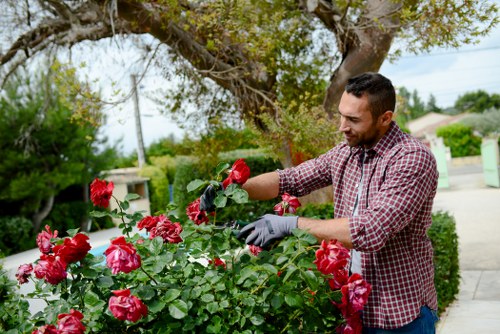
 Personal protective equipment must be selected for the task and worn correctly. This may include gloves, eye protection, hearing protection, high-visibility clothing, protective footwear, and sun protection. PPE does not replace safe planning, but it provides an important final layer of defence. Workers are expected to look after their equipment and report any damage or fit issues promptly.
Incident Reporting and Emergency Response
All hazards, near misses, injuries, and equipment failures must be reported as soon as possible. Prompt reporting allows corrective action to be taken and helps prevent similar events from happening again. Supervisors should review incidents carefully, identify causes, and update procedures where necessary. A transparent reporting process is part of a mature landscaping Belmont safety system.
Emergency procedures must be understood before work begins. Team members should know how to respond to injury, fire, chemical exposure, severe weather, or contact with hidden services. First aid supplies must be available, and at least one trained person should be present where practical. Clear evacuation routes, safe assembly points, and communication steps support a quicker and more organised response during an emergency.
We also expect safe storage and handling of fuels, chemicals, and other materials. Products must be kept in labelled containers, stored away from ignition sources, and used according to instructions. Spills should be contained and cleaned quickly using the right equipment. Good storage habits reduce environmental impact and support safer Belmont landscaping operations overall.
Shared Responsibility and Continuous Improvement
 Safety is a shared responsibility. Managers must provide suitable resources, instruction, and supervision, while workers must follow procedures and speak up when something seems unsafe. Visitors and subcontractors are also expected to comply with site rules and remain within designated areas. By working together, we create a safer environment for everyone connected to the project.
Regular review is essential to keeping this policy effective. Work methods, equipment, and site conditions change over time, so safety practices must be updated accordingly. We encourage regular inspection of procedures, toolbox discussions, and practical improvements that make tasks safer and easier to manage. This commitment helps landscaping services Belmont remain dependable, professional, and safety-focused.
Our aim is to deliver quality outdoor work while protecting people at every step. Safety is not treated as a separate task; it is built into planning, execution, and follow-up. With careful attention to risk control, training, maintenance, and communication, Belmont landscapers can complete their work efficiently while maintaining a strong standard of care.
Policy Commitment
 This health and safety policy will be followed by all personnel involved in our operations. Failure to comply with safety requirements may result in work being stopped and corrective action being taken. We are committed to continuous improvement, safer work methods, and a workplace culture where health and safety remain a priority in every aspect of Landscaping Belmont.